


The Mexican Institute for Competitiveness (IMCO), in collaboration with the Friedrich Naumann Foundation (FNF), analyzes Mexico’s trade position in the face of the protectionist shift in U.S. tariff policy and the possible outcomes of the treaty’s six-year review. This research shows that, in the most protectionist trade environment the United States has experienced in decades, the United States-Mexico-Canada Agreement (USMCA) has proven to be the only treaty of its kind to have preserved its relative value.
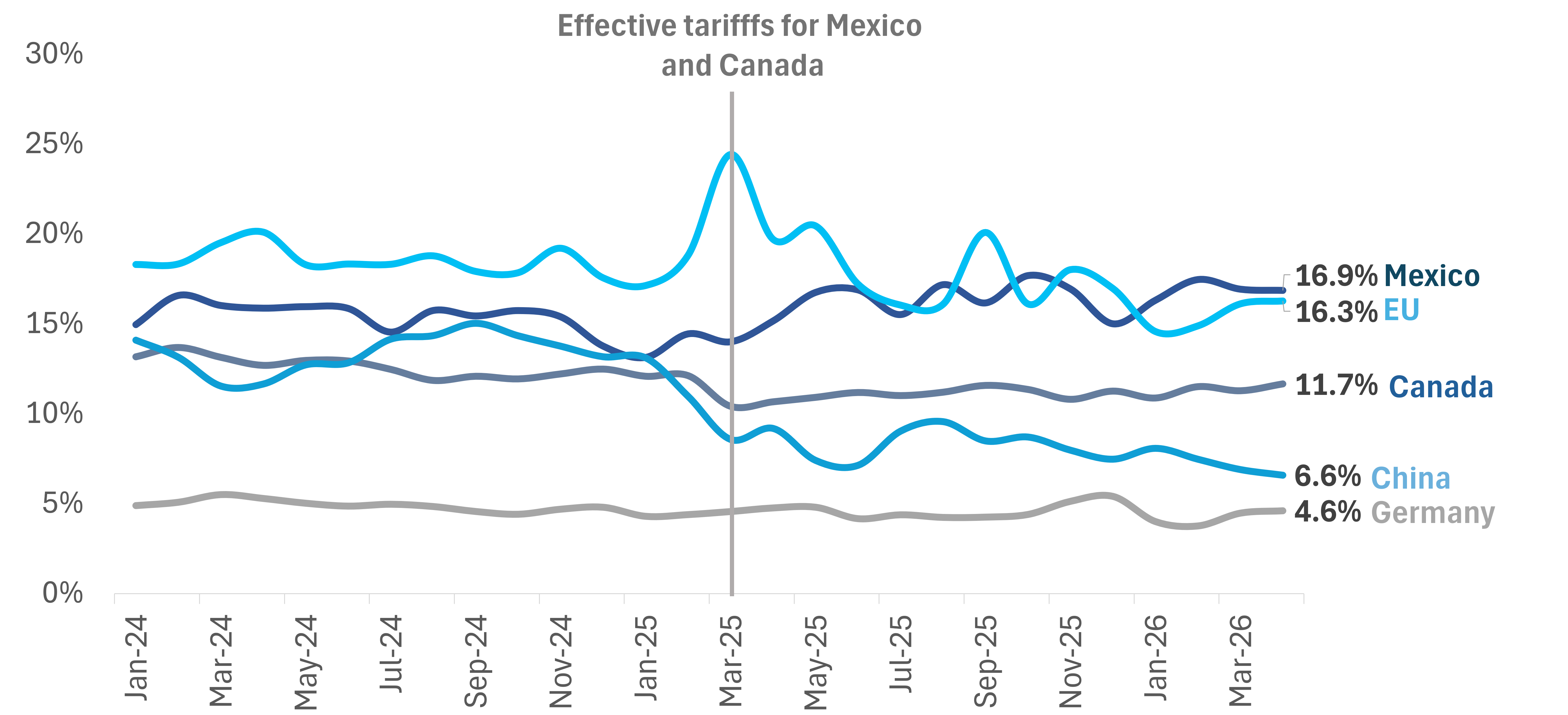
While Washington imposed tariffs of up to 50% on its main trading partners, Mexican exports that comply with rules of origin have retained their preferential access to the U.S. market. As a result, in April 2026, Mexico consolidated its position as the top supplier of U.S. imports, with a 16.9% share of the total, surpassing the European Union (16.3%), Canada (11.7%), and China (6.6%).
Market share in total U.S. imports by trading partner. Percentage of total (January 2024–April 2026)
Source: Prepared by IMCO with data from the U.S. International Trade Commission (USITC).
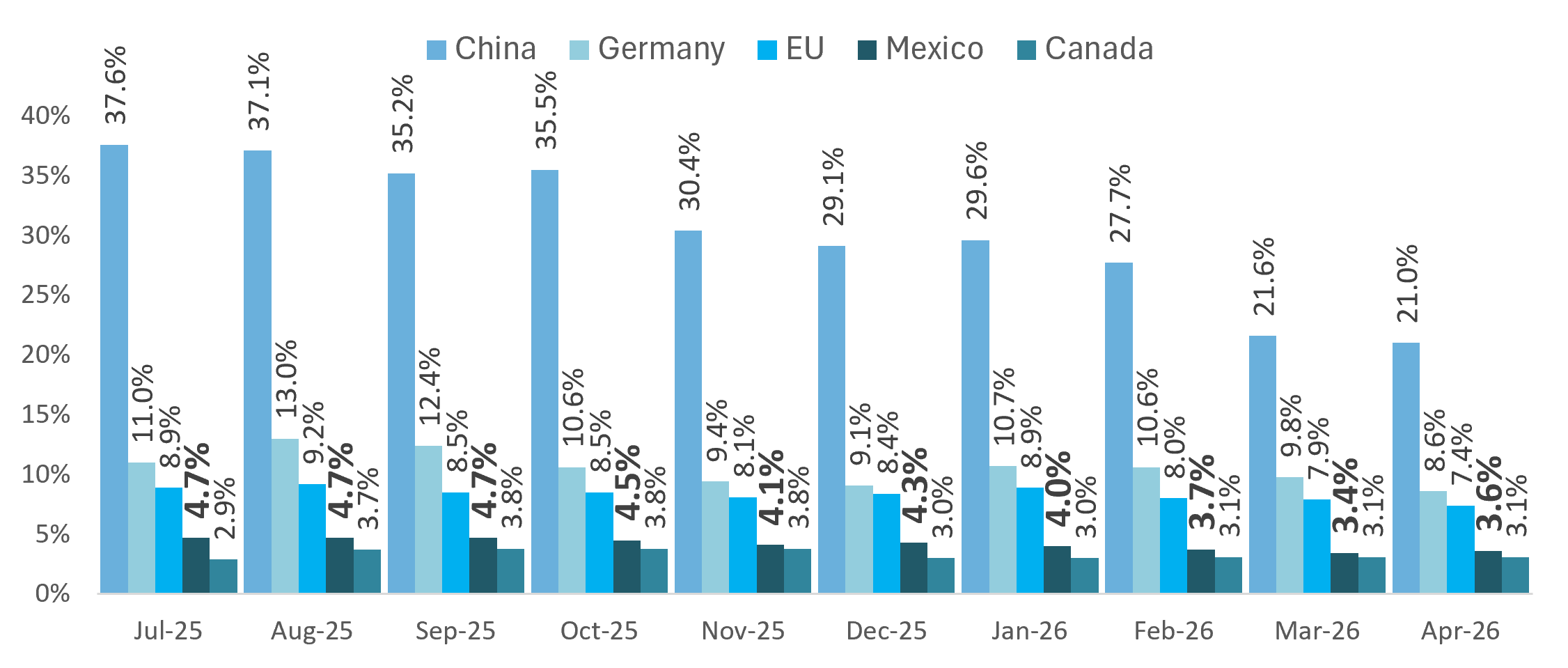
This is possible because Mexico’s implicit tariff rate —at just 3.6%— is among the lowest of the country’s major trading partners, compared to 7.4% for the EU, 8.6% for Germany, and 21.0% for China.
Implicit tariff rate collected by the United States by trading partner (July 2025–April 2026)
Source: Prepared by IMCO with data from the U.S. International Trade Commission (USITC).
These results reflect Mexico’s starting position ahead of the formal USMCA review, whose deadline is set for July 1, 2026, in accordance with Article 34.7 of the treaty. The most likely scenario —given current conditions— is a review extended into 2027, with heightened uncertainty over the terms of treaty renewal, but with tariff preferences remaining in effect throughout the negotiation process. This does not mean the USMCA is at risk of disappearing, but rather that the conditions under which Mexico will compete within the region over the next decade will be defined in this process.
For German and European investors with a presence in Mexico, the key message is that the country remains the most competitive strategic platform for accessing the North American market. The adjustments and demands that will emerge from the review also represent an opportunity to deepen regional integration.
Mexico’s concrete task in this negotiation is to preserve and consolidate the advantage it has maintained so far, while also strengthening rules-of-origin compliance, reducing dependence on inputs from Asia, modernizing customs processes, and coordinating positions with Canada in response to Washington’s demands on energy, intellectual property, and Chinese investment.